Thursday, January 19, 2006

Dave who?:

Some of you may be in my address book. Well, to be honest, my address books, since I have several of them.

If you are in my address book, then you are receiving really annoying requests for updates from a service called AccuCard. This helps me keep about 2,000 addresses straight - if you reply.

The trouble is, those address books are in several different operating systems, and on several different devices.

Here's what I worked out to keep it all synchronized. First, a schematic (click on it to get a larger version):
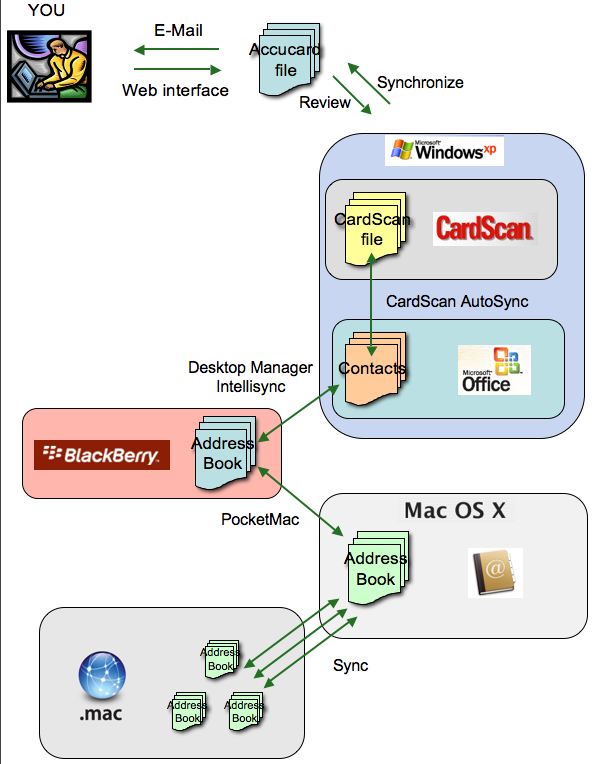


You use a web interface to reply to an e-mail from the AccuCard service.

I review your updates from my PC with a program called CardScan. CardScan automatically synchronizes those changes with the Contacts file in Outlook.

I then synchronize my BlackBerry with Outlook Contacts using Desktop Manager Intellisync.

The BlackBerry serves as an interface between the PC world and the Mac world. A poor solution, but the one I have at hand. Poor because the mapping between all the fields available in Outlook Contacts and the Mac Address Book is not ideal when constrained by the lesser number of fields on the BlackBerry. I fight home/work label switches constantly, and middle initials appear multiple times. Accents are also unpredictable. (See a later post about these problems)

The transfer to my Mac PowerBook is done via PocketMac for BlackBerry. From there, I propagate the address book via .Mac Sync to my other Macs at work and home, and into my iPod.

...just 'cause I have your info doesn't mean I willl write. You have to catch me in the mood, when I am not tired of running all these stupid programs.

Wednesday, January 18, 2006

Skaro visitor:

When I posted on Dec. 25 about FAO Schwartz, I also mentioned Hamleys, the famous toy store on Regent's Street in London. Well, when I went to Hamleys' website, I spotted a radio controlled Dalek for sale. Childhood dreams of building a Dalek cascaded about me, and well...

It arrived yesterday:


The cats are in a panic. They do not like this evil thing.

I claim that my wife was spared the annoyance (and embarrasment) of a full size model. Oh, and the expense, too.

Monday, January 16, 2006

Marvel, DC, Casterman...

Well, the reason for the long hiatus in posting at the end of last year was a ton of travel.

...oh, and this too. More to come.

Friday, January 13, 2006

Struggles with Saturn:

Appropriately for Friday the 13th, I am finding problems with electronic calendars.

Say someone was born on February 29th (a leap year, of course), and you want to set an electronic reminder for their birthday. You would think a program could automatically figure out that on non-leap years, it should go off on February 28 or March 1, right?

Well, here Mac loses to, ...shudder, Windows.

Whereas Outlook 2003 handles this smoothly, Macintosh iCal can't do it (at this posting, version 2.0.3). The birthday, or any an annual event reminder, will only appear during leap years in iCal. I sent a comment off to Apple's iCal feedback service (which seems to have stopped updating their iCal version drop-down). We shall see.

I always wondered how government systems handled people who were born on leap year days: when are they old enough to drive? When can they vote? When do they receive old age pensions? I am sure there are a whole category of horror stories out there...

Thursday, January 12, 2006

Keir Dullea, are you there?

Today is HAL-9000's birthday. You remember HAL, don't you? HAL-who-won't-open-the-pod-bay-door-HAL.

"I'm afraid I can't let you do that, Dave."

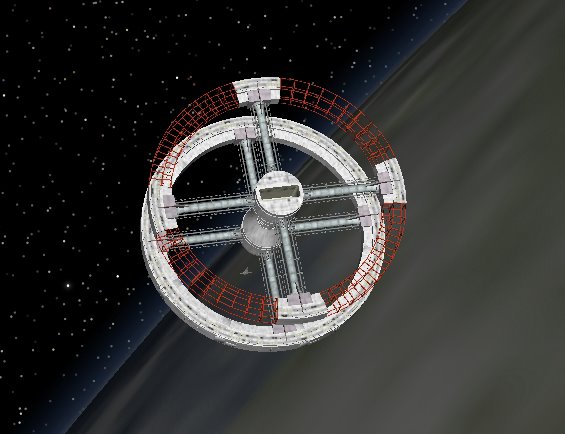
The last time I posted about HAL in 2003, Thus Spake Zarathustra started playing on iTunes radio. This time, a new program I had just installed popped up this window:


At first I thought it was an Easter Egg related to the date, but no. It's just a feature to let you know that you are being watched... Very creepy coincidences.

This shot was generated by a screen capture from Celestia, a most amazing program for touring the virtual Milky Way, with some extra data files from the Celestia Motherlode:


This image of one of the pods is from a Space Odyssey Icon set for Mac by Mischa McLachlan:

Tuesday, January 10, 2006

Early mornin' rain...

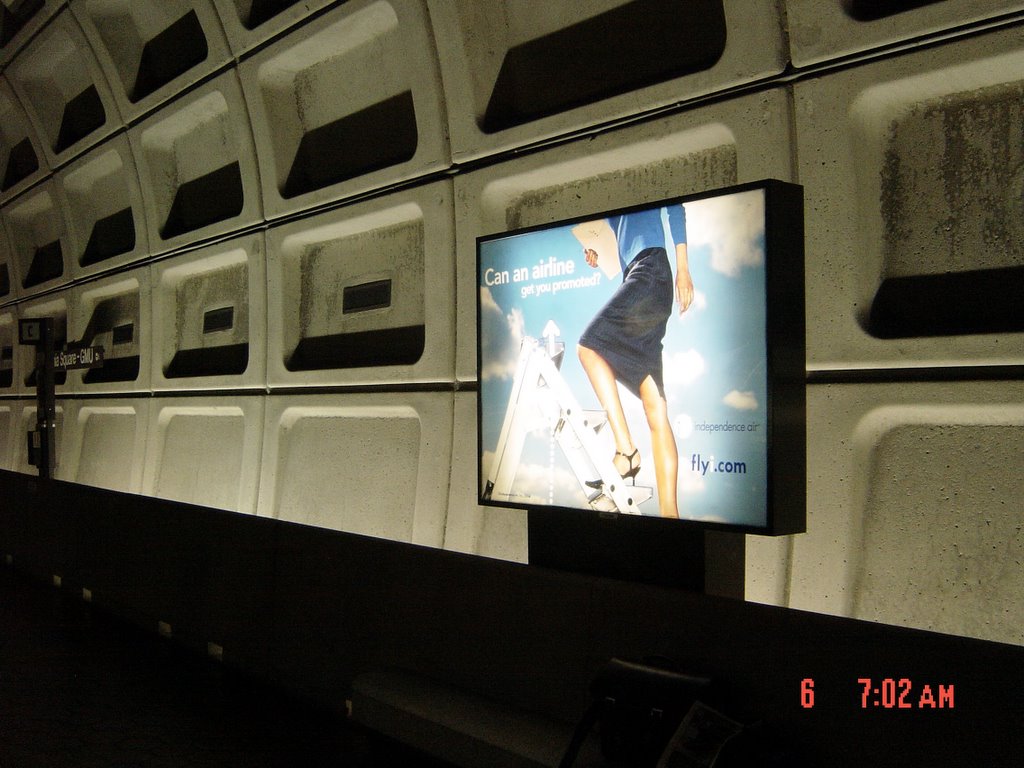
Except of course, independence air did not use big ol' 707s (Apologies to Gord).

Well, still there on Monday, and today Tuesday.


My wife, ever the practical one, said quickly: "Metro probably has a replacement schedule, and it's cycle isn't over yet."

Well duh. Of course. They replace them all at once. So much for all that fancy schoolin' of mine.

Monday, January 09, 2006

Foundation, Basis, Basement, whatever...:

It was bound to happen.

Since the National Science Foundation has been required to participate in the Grants.gov portal, our programs have been exposed to a whole new customer base. Usually, only the scientific research community pays any attention to our program announcements, funding opportunities, etc., but through Grants.gov you can search on all sorts of words to find opportinities for government funding.

We recently got an application requesting funding of a foundation for a building in Vermont. As in poured concrete.

...as long as it's scientifically poured, and then peer-reviewed, and finally published in the literature...

Hmm, methinks now, "al-Qaeda" stand for "foundation," so...

Twenty-two Year Old Quiz:

...Not for twenty-two year olds - it was twenty-two years ago that this was handed out at a 1983 Caltech psychology class (PSY 12, Breger), and I rescued it from a "basement box" destined for the trash.

Despite the spelling of "gauge" in the introductory paragraph, this test must be originally American--there are several items that are peculiar to this country. I was flummoxed by three of these because I did not grow up here. For non-Americans, I would give a +6 handicap. For non-native English speakers, I would give a +11 handicap.
---
This test does not measure your intelligence, your fluency with words, and certainly not your mathematical ability. It will, however, give you some gauge of your mental flexibility and creativity. In the three years since we ("we" is unknown) developed this test, we've found few people who could solve more than half of the 24 questions on the first try. Many, however, reported getting answers long after the test had been set aside--particularly at unexpected moments when their minds were relaxed, and some reported solving all the questions over a period of several days. Take this as your personal challenge.

INSTRUCTIONS: Each question below contains the initials of words that will make it correct. Find the missing words. For example, 26 = L. of the A. = Letters of the Alphabet. GOOD LUCK!!!

  1. 26 = L. of the A.
  2. 7 = W. of the A. W.
  3. 1,001 = A. N.
  4. 12 = S. of the Z.
  5. 54 = C. in a D. (with the J's)
  6. 9 = P. in the S. S.
  7. 88 = P. K.
  8. 13 = S. on the A. F.
  9. 32 = D. F. at which W. F.
  10. 18 = H. on a G. C.
  11. 90 = D. in a R. A.
  12. 200 = D. for P. G. in M.
  13. 8 = S. on a S. S.
  14. 3 = B. M. (S. H. T. R.)
  15. 4 = Q. in a G.
  16. 24 = H. in a D.
  17. 1 = W. on a U.
  18. 5 = D. in a Z. C.
  19. 57 = H. V.
  20. 11 = P. on a F. T.
  21. 1,000 = W. that a P. is W.
  22. 29 = D. in F. in a L. Y.
  23. 64 = S. on a C. B.
  24. 40 = D. and N. of the G. F.


There are no real answers for this, so whatever makes sense and fits is the answer.
---
Let me know how you do over the next few days and weeks, and which category you fit into. No hints! That's missing the point of this!

Some of these came to me months later, out of the blue. That is the point.
--------------------------
Sent from either my Newton2100 or my BlackBerry Wireless Handheld

Saturday, January 07, 2006

Advertising babble:

Marketing departments must think we are idiots.

It irks me to see things that are plainly there because they "sound good," and which don't stand up to a logical train of thought, produced in a few seconds. Viz.:


This is Glucerna, a drink for diabetics, but it could just as well be any drink, ice cream, or similar product with vanilla.

Why on Earth include the term 'homemade'? Have you ever heard of vanilla that was homemade? This century? Who bothers to go through all the trouble of mashing the seed pods in alcohol any more? Not even the most devoted scratch cook I know makes "homemade vanilla." To top it all off, in small type, right under that, it says "Artificially Flavored."

All because 'homemade' has such happy overtones, and not for any reason that has anything to do with the process of manufacturing itself.

So, homemade artificial vanilla: yum.

Harrumph.

Friday, January 06, 2006

Farewell, still:

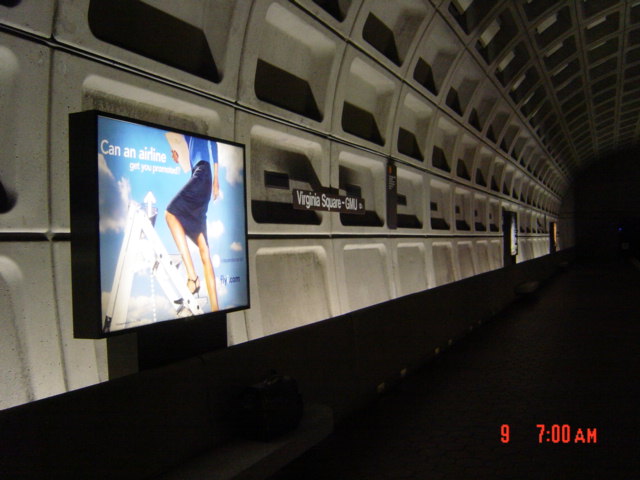
Well, Metro is apparently unaware of the demise of independence air... (at least as of 7 AM this morning):


We'll see if this lasts into next week...

Lots of coverage of the last flights from Dulles last night on TV, and I heard tonight that JetBlue is bidding for their Boston traffic with $25 fares. Tempting, but then there are the Boston hotel rates...

Thursday, January 05, 2006

Farewell:

Overstepping, couldn't get in step, broke a leg.

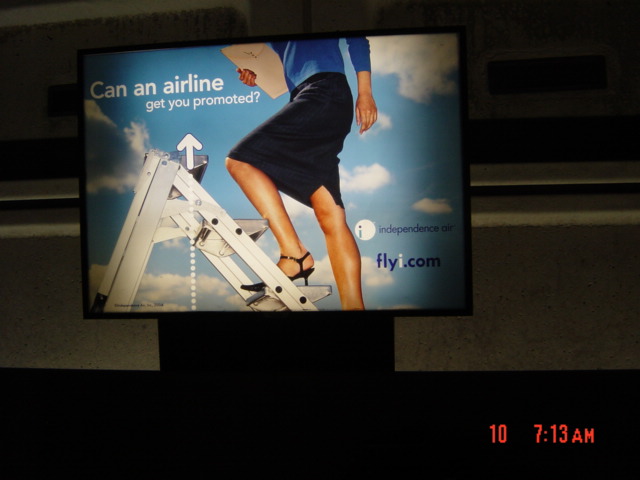
I ride on the same position in the subway car each day. And each day I saw this poster for independence air in front of the open door at one of the stops:


My question was, would the poster be here on Friday, the day after independence went out of business? How effective is the Metro's advertising revenue section? Would they strip the poster as soon as flyi.com could no longer pay for the space?

More tomorrow.

Tuesday, January 03, 2006

E-addiction

Recently, I made fun of a friend for using his BlackBerry during a party. The devices are devilishly addictive, and the term "CrackBerry," used by yet someone else, struck me as particularly apt.

I realized however, that I was actually in denial regarding my own addiction when I walked straight into a glass door in the midst of using my blasted device. I have also realized that there are other effects - I had the experience of being able to recall someone's e-mail address, but not their real name, when I knew them quite well.

The social norms that guide use of these devices have changed. Seeing someone yammering away to themselves on the street is no longer a sign of dementia. Apparently, it is acceptable to wear earphones (or even headphones) when out with one's friends or parents. I recently saw a table at a restaurant where all four people were talking on their cell-phones. One of them spoke on the cell for the whole meal.

I have posted before about electronic disruption of family life, and how television was the end of most conversations over the neighbourly fence. These portable devices are yet another layer insulating us from our fellow citizens, and especially from the natural world. There are many SciFi stories about an eventual rejection of these devices, but I am sceptical - those attitudes will always be at the fringes of society, joining the Luddites and the Unabomber in their historical irrelevance. What is important is how our social contract is affected -or not- by these devices, and not how they help or hinder our lives.

(While typing out this message, I got on the wrong subway line. Sigh.)

...Now, if I could only get some help for my aching thumbs...
--------------------------
Sent from either my Newton2100 or my BlackBerry Wireless Handheld

Sunday, December 25, 2005

Frederick August Otto S.

...this was actually a draft from Christmas 2004, but sometimes it just takes a while for me to post things...

And Mr. Schwartz is no more. I passed an empty F.A.O. building in San Francisco and it made me sad - but I didn't go to F.A.O. as a kid, I went to Hamleys!

Thursday, December 22, 2005

Apparent Santa Wandering:

I have been attending some discussions lately where we discuss the upcoming International Polar Year activities.

One of the NASA boffins was going on about how many poles there are: the Moon has poles where we hope to find water for lunar bases, Mars has polar caps with water and carbon dioxide ice, and Uranus has poles that ocasionally point at the Sun. Heck, even the Sun itself has poles, although they aren't very cold.

The talk about the Sun having poles made me realize that because poles are simply where the axis of rotation intercepts the surface, there are bodies out there that have no poles in the usual sense: the chaotic tumblers. These are bodies that are oddly shaped enough that they are dynamically unstable, and do not rotate regularly. You may have seen or even done the old physics demo where a heavy textbook is held shut with rubber bands, and then tossed while being spun around various axes. Spinning the book around the short and the long axes works fine, but that intermediate one... there's that unstable wobble. Now imagine an enormous rock doing this in space. Hyperion, one of Saturn's moons, is a chaotic tumbler, and the recent visitor Toutatis (about which I posted last year), is another.

Now imagine if Santa were on one of these bodies, having to move his toy factory every few days.

Wednesday, December 14, 2005

RSS Feeds and the RSS Visualizer Mac screensaver:

Bring up the RSS feed from your favourite source as a screensaver on an (OS 10.4) Mac. Nifty!

I often have this screensaver set to the BBC International Headlines RSS feed, but I only just figured out how to customize this to more than the default set of RSS feeds supplied by Apple within Safari...

You need to make sure your desired RSS feed's URL is saved by Safari before you can get this to work.

1. a. Launch Safari and navigate to your desired source.
b. Check to see if they have an RSS feed (should be on the front page if they are worth their web-savvy salt, and Safari will display an RSS button in the address bar if it can detect it). RSS feeds are sometimes called XML feeds.
c. Click on the RSS button or link link to display the RSS feed within Safari. You should see a list of titles and brief excerpts of postings.
d. Bookmark this page (the RSS feed, and NOT the website itself - you should see an URL ending with .xml).
e. Close all Bookmark management related windows! This ensures you are actually saving the URL within Safari's Bookmarks.

2. a. Launch the System Preferences app from the Apple menu
b. Click on the "Desktop & Screen Saver" icon.
c. Click on "Screen Saver"
d. In the Screen Savers list, select "RSS Visualizer"
e. click the "Options..." button
f. select your desired RSS feed from the displayed list of all your Safari RSS feeds, and click the "Done" button

Sigh. Don't display your own blog RSS. That's just plain vanity. Give your family grief for not doing it.

One feed that gets me laughing (caution, may be mildly offensive to some): The Onion - weekly

Tuesday, December 13, 2005

Apple Chat:

A good example of why electronic chats do not work well. I wasn't sure whether I was really speaking to an Apple agent, or whether this was an "Agent" as in an artifically intelligent agent that was parsing my posts against a FAQ...

Agent:
Thank you for contacting Apple Chat support. My name is Abhishek, please give me a moment while i access your records in our database.

Agent:
Thank you for your patience, may i know if you are calling about an existing issue or will this be a new one?Paul:
Hello Abhishek, good day to you wherever you may be. A new Issue - headphone port on an iMac.

Agent:
Hi Paul, how may i help you today?

Paul:
When I first purchased the iMac, I tried headphones and external speakers, and they did not work. I assumed I had the wrong jack and sold my speakers. I just bought a new set, and they don't work either (I have tested them on other equipment, so I am fairly sure it is the port on the iMac).

Agent:
As i understand you are unable to connect the external speakers to the imac using the jack, is that correct?

Paul:
I can connect, but the sound is not correct - it is distorted.

Agent:
I will send you an article that addresses the issue....

Agent:
I have pushed a page onto your browser, it should come up on the right side of your Chat window.

Agent:
The url for the page is ...

Agent:
http://docs.info.apple.com/article.html?artnum=86810

Paul:
Yes, thank you I have seen this one - the speakers do have a 3.5mm metal analog jack, but it does not seem to go all the way into the Headphone jack on the iMac.

Agent:
May i know if you have purchased the jack as per the configuration shown in article?

Paul:
Yes, the speakers were bought from Apple.

Agent:
I would suggest you to take the headphone and speaker set to the Apple Store and have them check the jack with the other Apple computers....

Paul:
I have tried the speakers on my Mac laptop, and they work there...

Paul:
These speakers work on other Macs. Other speakers have not worked with this iMac. Ergo, it is most likely the port on this iMac.

Agent:
I believe the issue is related to the port of the imac, as you have tested the jack with other Macs.

Agent:
I would advise you to take the imac to the nearest Apple Servie Provider and they will be in a better poition to help you with the issue.

Paul:
OK, thank you for your help today, Abhishek.

Agent:
You are welcome.

Agent:
Is there anything else i can assist you with?

Paul:
Unless there is some way of installing it myself (I have reset the midplane on this machine before), I think we are done.

Agent:
Is it okay for me to end the chat?

Paul:
Yes, sorry. I did not realize I had to actively end it. Thanks again.

Chat Session Ended, Goodbye. (5010)


...Bummer, I was all set to blast my new JBL Creatures, but it looks like I will be sending the iMac off for repair (again).

Tuesday, October 11, 2005

Dougal's Wild Ride:

I received an interesting e-mail from a friend who is spending a year in England, working in the town of Swindon, near London.

As you may know, traffic in England circulates on the left side of the road. This has many consequences for the design of cars and for traffic flow. Most of these consequences are simply mirror-images of what North American drivers are used to, but they can range from simple adjustments to things that are frighteningly dangerous.

For example, the steering wheels in most British cars are on the right side. Things like the brake and accelerator pedals are not reversed, but the rear view mirrors and the gear shift and parking brake are. This means that while I can easily accelerate and brake in a rented car, I often bang my hand on the right-side door when it's time to use the stick shift, and I will look up and out the window when trying to see who is behind me, rather than looking at the rear-view mirror. That much can be adapted to fairly easily, but judging where I am driving in my lane is a different matter - and very difficult when on a narrow street, or parallel parking. Shearing off rear view mirrors is a common problem for tourists.

However, getting used to the traffic flow is what is truly unnerving. Driving straight ahead is fine (except on narrow lanes, as noted above), but once you have to make a turn, well, get ready, because your brain just screams WRONG! at you, and you have to consciously turn into what you fear is the oncoming lane. It is left turns that are easy, and right turns that cross traffic.

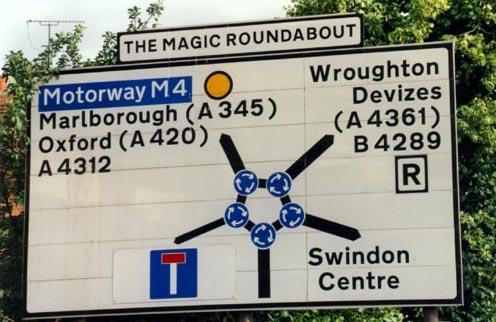
The real nightmare is the traffic circle, or 'roundabout,' as is called in Britain. Traffic circulates to the left, or clockwise, and Britain is full of these roundabout things. A very famous roundabout happens to be in Swindon, where my friend is working. Imagine coming across the following road sign, and trying to sort out what it all means, as you sail by at 45 mph:


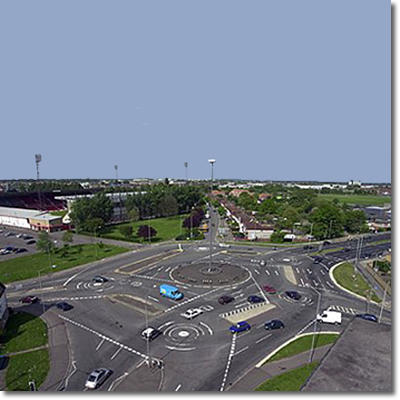
Take a close look at that sign - there are five mini-roundabouts within a mega-roundabout. And suddenly, you are faced with the real thing:


Note that the very inner part circulates in the opposite direction from the exterior. My friend avoids this area of town as much as possible in order to avoid encoutering this thing - but she was caught in it last weekend, and had to navigate the "Magic Roundabout," getting out of it at the first opportunity, and then regrouping (hopefully without being forced onto it again).

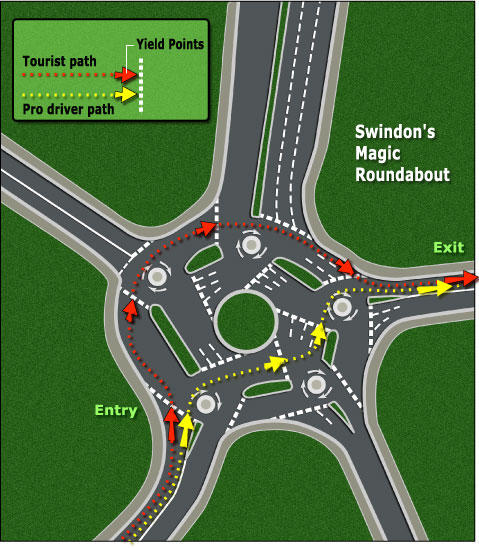
In the past she has had several bad experiences as a passenger in England - things like rearview mirrors flying through the window, sheared off doors and such, so I can cut her some slack on being nervous. Luckily, there are alternative tactics while in traffic structures like these, but I suspect these are not handed out in the literature car rental agencies supply:


So: are you a pro, or a tourist?

Here's a really great page showing GPS paths through the Magic Roundabout.

Monday, September 12, 2005

Chapulin colorado:

Another adventure in entomophagy for me. This time it was a conscious decision and not a mid-stride inhaling of a fly, or a mid-night swallowing of an errant spider.

I was in Puerto Vallarta, Mexico, last week (work, not play), and we went out to a restaurant called "El Arrayán," which had dishes from various regions of Mexico on the menu, prepared by a chef trained at a Swiss cooking school. So there were all sorts of shi-shi variations on the menu, but not so far from traditional that it could not be called Mexican.

One of the things on the menu were chapulines, or grasshoppers. Now I had seen these on various TV shows, and knew that they were eaten in Mexico, and I was in just the right mood to dare ordering them.

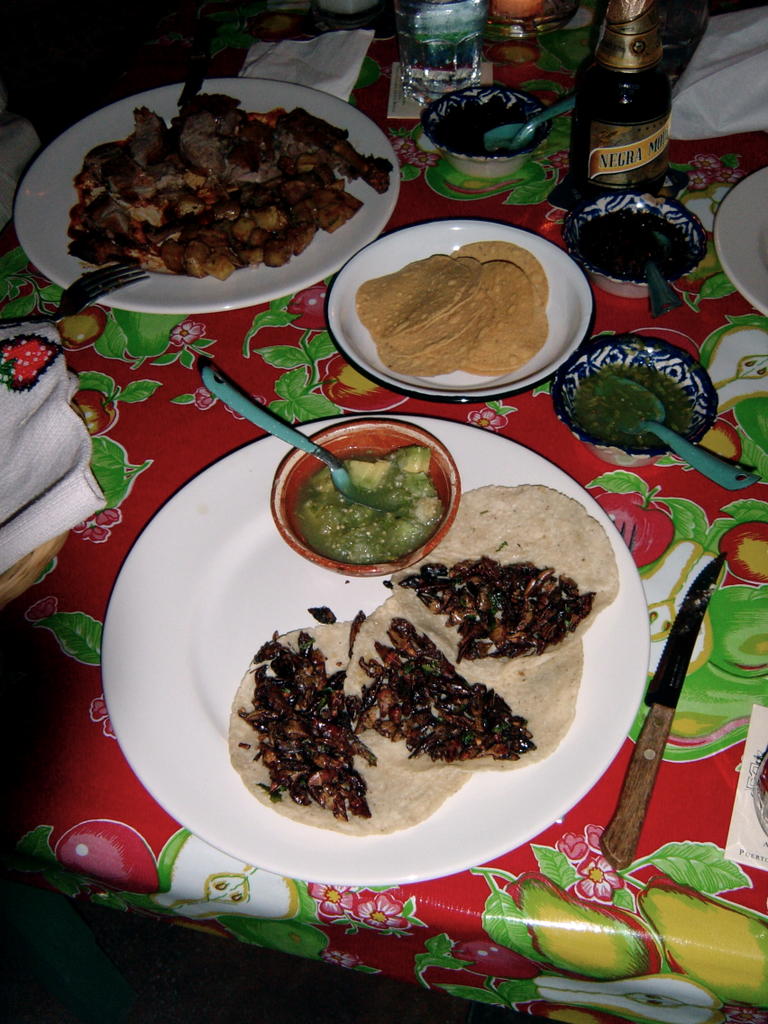
They were yummy. Let me rephrase that: THEY WERE YUMMY. Here are the requisite photos:

They were a lot smaller than I expected. The salsa was a avocado-poblano sauce with lime (quite yummy by itself). The best way to describe the taste is roasted black tea leaves.

I ate two of the little tacos, and my boss ate the other (and she greatly enjoyed it too). Out other dining companion dared to taste a single chapulin, and was gracious to say it was nice.

My son and my wife were completely grossed out by the photos, when I returned - I have to say that the photo of course only leaves you with that uneasy feeling you get when faced with an unfamiliar food. I couldn't tempt them with the smell and taste, which were very un-insectlike. When eating insects, one has to consider that they are very similar to shrimp. Still, whoever ate the first shrimp, lobster or grasshopper was brave, in any case. They are all ugleeee.

A little more on the restaurant - they have a website. Carmen, the owner, is a spunky little elf of a girl, who has taken on a tough business. The location and the decor are great - it reminded me very much of old houses in hot country in Colombia - thick, whitewashed adobe walls that are painted in color on their lower halves, narrow shuttered and barred windows overlooking the street. Plenty of old terra cotta tiles, and lots of hanging potted plants.

  • El Arrayán
  • Allende #344 Colonia El Cerro
  • +52 (322) 222 71 95
  • info@elarrayan.com.mx


The interior was also decorated with some amazing Huichol art - brightly colored yarn is laid down into beeswax-coated wood in intricate patterns that are said to have their origins in peyote-indiced visions. The set displayed in the restaurant are Carmen's inheritance from her grandmother, and are in amazing condition after having been in storage in Mexico DF for over 25 years. Here's one of them:

Friday, September 09, 2005

Another Crescent City:

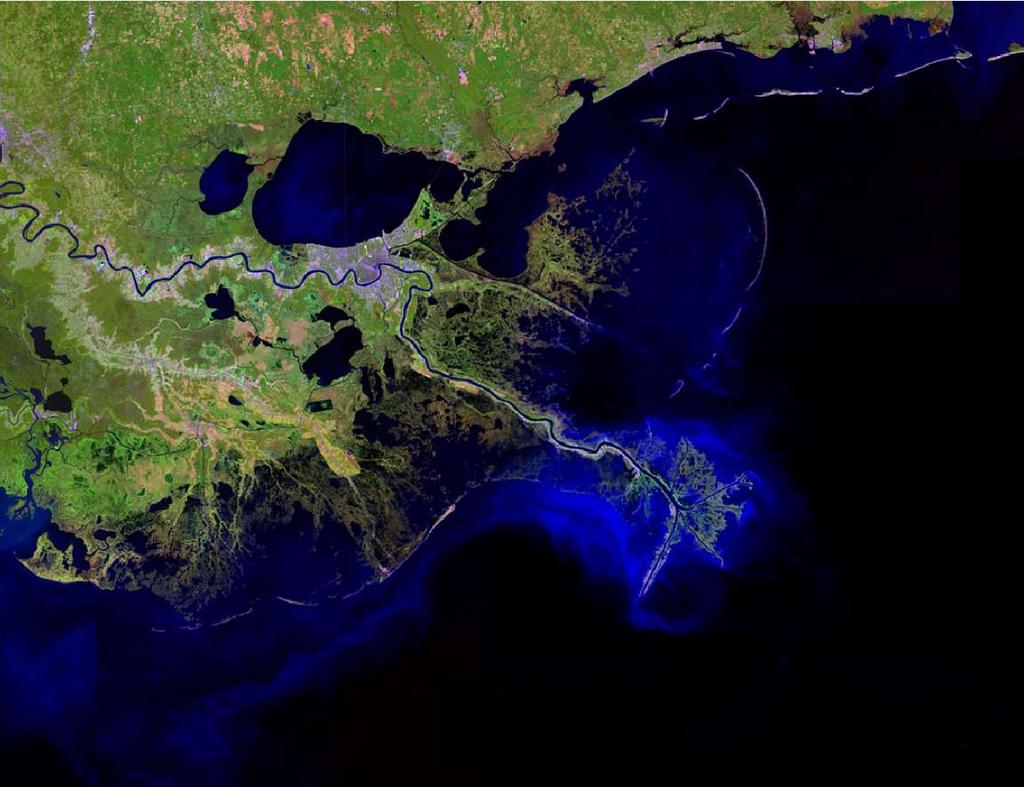
This beautiful image by Stephen S. Young of Salem State is of the Mississippi delta area. Much of it has been changed by Katrina. The outer barrier islands have been altered tremendously, and of course the city of New Orleans, visible as the grey area between the river and the dark waters of Lake Pontchartrain, would show up differently since it is full of water now.

This image shows quite clearly that the levees stopped the deposition of sediments in the proximal distributary area, and allowed them to drop out only at the far end of the river - the crows foot extending ever-further into the Gulf. That, of course, was one of the ingredients in the disaster - river deltas depend on an equilibrium between the sinking sediments and the yearly piling on by floods to maintain a constant height above sea-level. As soon as you stop delivering sediment, the surface will slowly start to drop, and you will eventually be below sea-level, and you will have to start building dykes, or levees.

I am in Mexico this week, in the town of Puerto Vallarta. A much smaller version, but many of the same ingredients - the shore is built on a set of sandy dunes that buffer the wetlands behind from many of the storms that weep in off the Pacific. The river deposits sediments in the wetlands, and the sea delivers sand to the dunes, and there was a slow dance back and forth as the shoreline moved back and forth over thousands of years. Until modern man, that is.

With the construction of spillways to control the meandering of the river, sediments are no longer delivered to the wetlands, and they are slowly sinking. Large housing developments are being put into these wetland areas, replacing the farms. With the construction of beach front resorts and sea walls, beach erosion results. The end result: a large storm will eventually come through here, and there will be no beach dunes to stop the storm surge from flooding the housing developments.

Mexico does have environmental laws that prohibit exactly this kind of situation. But the Federal laws have very little weight here, where the Mayor and the town's workers are interested in the money injected into the local economy by real estate development on the shore and in the wetlands. As always, it is the social context that makes it a very complicated situation - the environmental economic costs of this pattern of development are not expressed in any tangible way, and won't be until disaster strikes.

Wednesday, August 31, 2005

All Katrina, all the time:

One item I have not heard yet on the news.

The insurance industry is caught in an interesting situation. They are well aware that one of the largest consequences of climate change is an increased frequency of more intense storms. This has a very direct consequence for their projected losses in any given season. Most of them have realized that their actuarial models based on historical storm frequencies are not the state-of-the-art anymore, and they have spent a great deal of money on computer models that match storm predictions to real estate and infrastructure inventories in order to understand what the consequences of a storm season might be.

However, the law constrains them to base their premium rates on historical records. They will therefore always be behind the curve, and they know that there will be little goodwill from a public that perceives them with suspicion. After all, who has the money to put up the largest building in just about every city?

$25 billion of damage and counting.

An interesting simulation of flooding done by NASA using Shuttle Radar Topography data: Quicktime, 6Mb. Current flooding is between the 3 and 4 meter marks.